
Excellence in Every Grain — From India to the Kingdom of Saudi Arabia
Saudi Arabia stands among the largest importers of Indian rice in the world, importing millions of tons each year to meet domestic consumption. The Kingdom has a deep cultural connection to premium-quality Basmati rice, especially varieties that enhance iconic dishes like Kabsa, Mandi, and Biryani.
When it comes to sourcing rice, India remains the most trusted and preferred supplier thanks to its superior quality, aroma, and consistency. If you are a Saudi importer, distributor, or wholesaler looking to import rice from India, this detailed guide by Eastgate Export will help you understand every step — from selecting the right rice to ensuring smooth delivery to your Saudi port.
Step 1: Choose the Right Variety of Indian Rice
India produces a diverse range of rice varieties suitable for different consumer needs in Saudi Arabia. The two main categories are Basmati and Non-Basmati rice.
Basmati Rice (Premium Segment)
Indian Basmati rice is world-famous for its long, slender grains and distinct fragrance. Popular varieties exported to Saudi Arabia include:
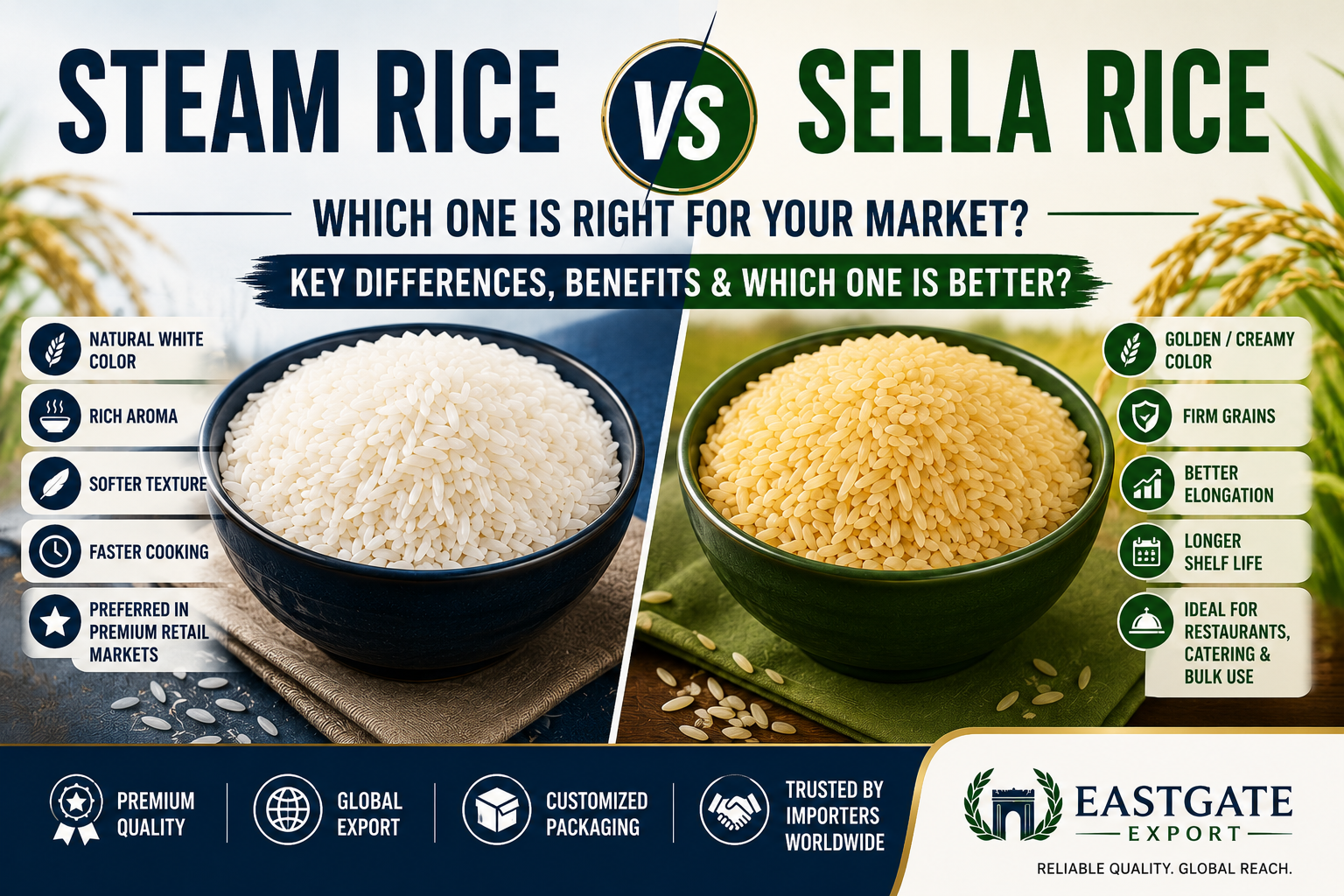
- 1121 Golden Sella Basmati Rice – known for its aroma and firm texture.
- 1509 Creamy Sella Basmati Rice – soft, fluffy, and ideal for Saudi Kabsa.
- strong>Traditional Basmati Rice – perfect for premium hotels and catering.
- Steam and Raw Basmati Rice – aromatic with a natural, rich flavor.
These premium varieties are widely used by restaurants, hotels, and households across Saudi Arabia.
Non-Basmati Rice (Economical Segment)
For wholesale markets and large-volume catering, Indian Non-Basmati rice is a cost-effective solution. Top-selling options include:
- IR64 Long Grain Rice
- Sona Masoori Rice
- PR11 / PR14 Non-Basmati Rice
- Broken Rice for industrial or bulk buyers
Eastgate Export helps you select the most suitable rice variety for your target market in Saudi Arabia based on price range, grain type, and consumer preference.
Step 2: Select the Packaging and Labeling
Packaging is a vital part of successful rice import into Saudi Arabia. It not only preserves quality but also builds brand trust.
Preferred Packaging Types for the Saudi Market:
-
BOPP Laminated Bags: 1kg to 10kg for retail consumers.
-
Non-Woven or Jute Bags: 5kg to 50kg for wholesale.
-
Vacuum or Poly Pouch Bags: For premium Basmati varieties.
At Eastgate Export, we offer private label rice packaging — meaning you can sell rice under your own brand name. We print labels in Arabic and English, ensuring full compliance with Saudi import requirements.
Your packaging can include your brand logo, nutritional details, origin, and certifications — giving you complete ownership over your product identity in Saudi Arabia.
Step 3: Verify Exporter Credentials and Quality
When choosing a rice exporter, quality assurance is non-negotiable. Always ensure that your exporter is APEDA-registered (Agricultural and Processed Food Products Export Development Authority).
Eastgate Export is a trusted Indian rice exporter certified to supply Basmati and Non-Basmati rice worldwide. We maintain strict quality control from harvesting to milling and packaging, ensuring consistent grain quality, aroma, and purity.
We provide all necessary certificates for Saudi customs and food authorities, including:
-
Phytosanitary Certificate
-
Fumigation Certificate
-
Certificate of Origin (India)
-
Health & Quality Certificate
-
Halal Certificate (if required)
These documents ensure your shipment passes Saudi Arabia’s SFDA (Saudi Food and Drug Authority) inspection and ZATCA customs clearance without delay.
Step 4: Understand the Shipping & Logistics Process
Most rice exports from India are shipped through major Indian ports such as:
-
Mundra Port (Gujarat)
-
Kandla Port (Gujarat)
-
Nhava Sheva / Mumbai Port (Maharashtra)
Your rice will be transported in 20ft or 40ft containers, depending on the order size.
Common Saudi Ports Receiving Indian Rice:
-
Jeddah Islamic Port – main entry for the western region.
-
Dammam Port (King Abdulaziz Port) – serving the eastern region.
-
King Abdullah Port – a modern gateway for food imports.
The average shipping time from India to Saudi Arabia is 10 to 15 days, depending on the logistics schedule. Eastgate Export provides door-to-port delivery with full tracking and export documentation.
Step 5: Payment Terms and Documentation
To ensure smooth trade, secure and transparent payment methods are used between Indian exporters and Saudi importers.
Accepted Payment Methods:
-
Letter of Credit (L/C) – safe for large orders.
-
Telegraphic Transfer (T/T) – for repeat customers.
-
Advance Payment – for small or trial shipments.
Documents Provided by Eastgate Export:
-
Commercial Invoice
-
Packing List
-
Bill of Lading
-
Certificate of Origin
-
Fumigation Certificate
-
Phytosanitary Certificate
-
Insurance and Quality Certificates
We ensure that all documents meet Saudi Arabian import requirements, reducing the risk of delays or rejections.
Step 6: Saudi Import Regulations & Customs
Before you import rice from India to Saudi Arabia, make sure you have the proper business registration and import licenses.
You’ll need:
-
Valid Commercial Registration (CR) in Saudi Arabia.
-
Registration with ZATCA (Zakat, Tax and Customs Authority).
-
SFDA approval for food imports.
-
Clear product labeling in Arabic (we provide this service).
Eastgate Export ensures that your rice is pre-tested, certified, and labeled correctly according to Saudi standards, making customs clearance fast and easy.
Why Choose Eastgate Export
Premium Indian Rice Quality: We source from the most fertile regions of North India — Punjab, Haryana, and Uttar Pradesh.
Private Label Services: Build your own brand in Saudi Arabia with our customizable Arabic-English packaging.
Fast & Reliable Shipping: We coordinate directly with shipping lines to ensure on-time delivery to Jeddah, Dammam, or King Abdullah Port.
Competitive Prices: Get the best export rates with consistent quality assurance.
Certified & Trusted Exporter: Registered under APEDA and compliant with global export standards.
End-to-End Solutions: From sourcing and packaging to documentation and logistics — we manage everything for you.
Market Insight: India–Saudi Rice Trade
Saudi Arabia imports over US $1.3 billion worth of rice annually, and India supplies more than 75% of it. Basmati rice accounts for the majority of imports due to its aroma and cooking quality.
Indian rice brands have built strong loyalty in Saudi households and retail chains. By partnering with a reliable exporter like Eastgate Export, importers can easily establish or expand their rice business in the Kingdom.
Conclusion
Importing rice from India to Saudi Arabia is not only profitable but also sustainable, given the strong trade relationship between the two countries. With Eastgate Export, you can rely on quality, certification, and logistics expertise to deliver the finest Indian Basmati and Non-Basmati rice directly to your port.
From the lush rice fields of India to the dining tables of Saudi Arabia — we bring Excellence in Every Grain.