

Why EU-Norm Pesticide-Free Rice is Non-Negotiable for European Importers
The European Union (EU) represents one of the world’s most lucrative, yet highly regulated, markets for food commodities. For European importers of rice, particularly premium varieties like Basmati, the need for stringent quality control is paramount. Sourcing rice that meets the specific EU-Norms for pesticide residues is not merely a competitive advantage—it is a mandatory condition for market access, making it a truly non-negotiable requirement. Achieving EU-Norm rice compliance is the gateway to this lucrative market.
A reliable partner in this highly demanding space is crucial. Companies like EASTGATE EXPORT PRIVATE LIMITED, a leading Indian manufacturer and exporter of Basmati and Non-Basmati rice, have specialized in meeting these exact specifications, particularly the stringent requirements for EU-Norm Pesticide-Free Rice. They stand out as a certified rice exporter dedicated to quality.
The Legal Imperative: Maximum Residue Limits (MRLs)
The foundation of the EU’s strict approach lies in its Maximum Residue Limits (MRLs), primarily governed by Regulation (EC) No 396/2005.
The EU sets some of the lowest and most strictly enforced limits in the world for pesticide residues on food products. If any rice consignment, including high-demand Basmati rice from India, is found to contain residue levels exceeding these minute MRLs—even by a fraction—it faces rejection, and in severe cases, mandatory destruction. This highlights the absolute necessity of EU-Norm rice compliance.
For an importer, this is the single most critical factor. The EU does not operate on a case-by-case basis; compliance with these standards for Pesticide-Free Rice is checked at the border through mandatory sampling and testing. Non-compliance immediately halts trade and triggers severe financial and logistical burdens. EASTGATE EXPORT PRIVATE LIMITED specifically highlights its expertise in supplying EU Norm – Pesticide Free Rice, demonstrating a clear commitment to this regulatory compliance and ensuring smooth pesticide residue free rice export.
Financial and Logistical Risks of Non-Compliance
The cost of importing non-compliant rice extends far beyond the price paid to the supplier. The risks associated with a rejected shipment can quickly bankrupt an importing business:
- Shipment Rejection and Destruction: The primary consequence. The importer is responsible for either shipping the product back to the country of origin (costly) or, more commonly, paying for its destruction under EU supervision (extremely costly). This underscores the financial imperative of EU-Norm rice compliance.
- Loss of Capital: The full value of the commodity, shipping costs, duties, and handling fees are lost.
- Increased Scrutiny (Blacklisting): Repeated non-compliance leads to an importer or even an exporting region being placed on a mandatory enhanced inspection list. This slows down the supply chain and erodes competitiveness.
- Reputational Damage: Loss of trust from retail partners and distributors who face product recalls and public backlash due to food safety concerns.
The Evolving Landscape of Consumer Demand
Beyond legal compliance, the market itself is demanding cleaner, safer products. EU-Norm Pesticide-Free Rice aligns perfectly with modern consumer trends:
- Clean Label Movement: Consumers are increasingly seeking products with simple, traceable origins and minimal chemical intervention. They view pesticide-free as a key indicator of quality and health.
- Sustainability and Trust: Source credibility is vital. Importers who can prove a commitment to sustainable farming practices and thorough testing build long-term consumer loyalty.
- Future-Proofing: As the EU continues to tighten its MRLs and phase out certain older pesticides, sourcing rice that is already compliant with the highest standards ensures that the importer’s stock remains marketable for the foreseeable future. This proactive approach supports ongoing pesticide residue free rice export.
Partnering for Compliance: The EASTGATE EXPORT Advantage
For European importers, successfully navigating the EU’s MRL landscape requires partnering with dedicated and certified suppliers. EASTGATE EXPORT PRIVATE LIMITED exemplifies the kind of expertise demanded by the EU market, establishing itself as a premier certified rice exporter.
The company’s focus on quality and compliance is evidenced by its certifications, which include ISO 9001:2015, ISO 22000:2018, HACCP, HALAL, REX, SFDA, APEDA, and FSSAI. These certifications verify rigorous standards in:
- Pesticide Residue Management: Offering varieties like 1121 Pesticide Residue Free Golden Basmati Rice, ensuring EU compliance from the farm gate. This guarantees pesticide residue free rice export.
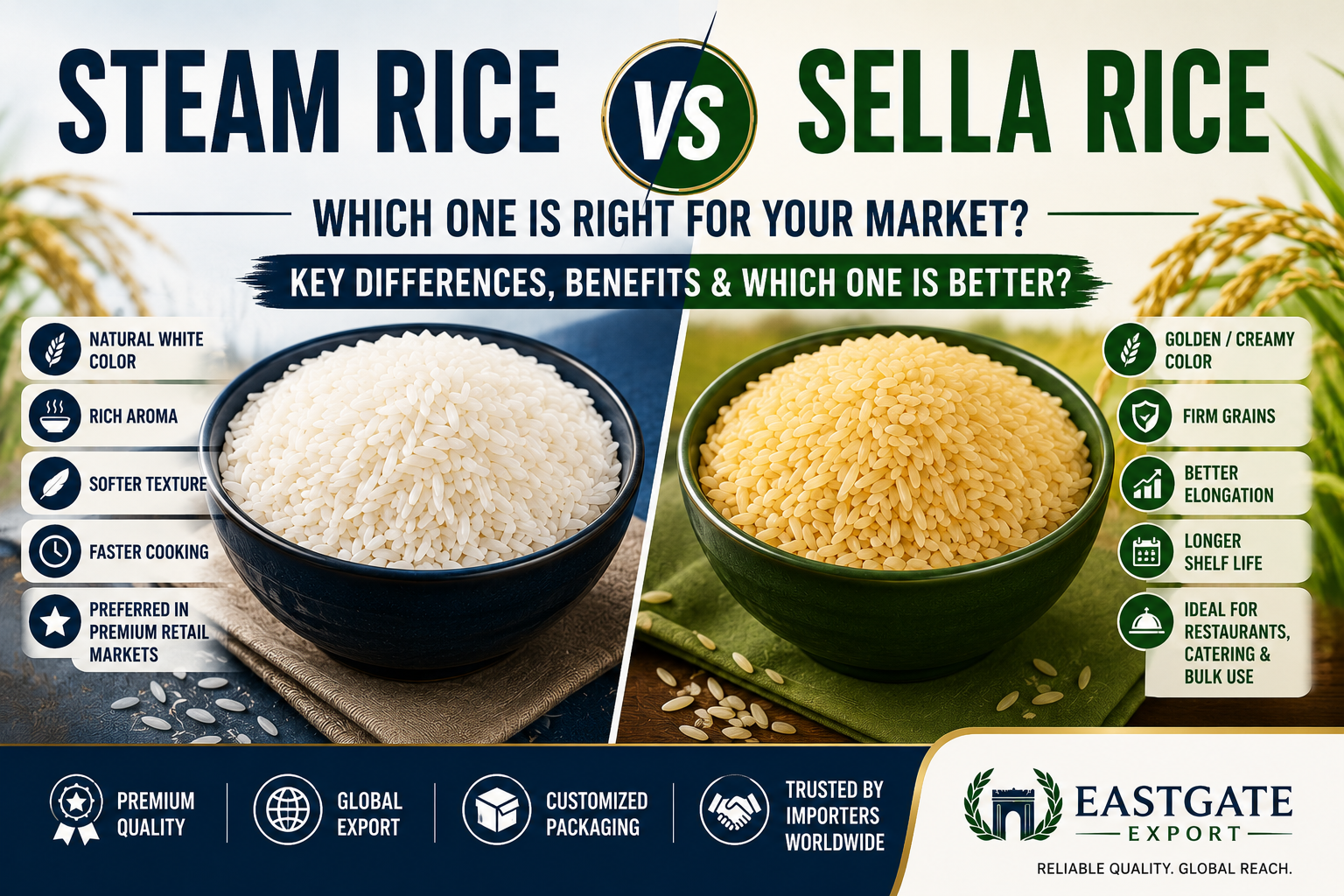
- Traceability and Quality Control: Ensuring every batch of rice—from Brown, Raw, Steam, to Golden Sella Basmati—is hygienically processed, tested, and certified before shipment. This robust process supports complete EU-Norm rice compliance.
- Global Export Readiness: Providing all necessary documentation and adhering to the logistical standards required for smooth importation into demanding global markets, including Europe and the Middle East, solidifying their reputation as a trusted certified rice exporter.
By prioritizing certified EU-Norm Pesticide-Free Rice and demanding full farm-to-fork traceability, European importers who partner with specialized exporters like EASTGATE EXPORT PRIVATE LIMITED transform a regulatory hurdle into a competitive market advantage built on safety, quality, and consumer trust.