
Buying Basmati rice from India can be highly profitable—but choosing the wrong supplier can quickly turn a profitable shipment into a costly problem.
Every year, importers compare dozens of Indian rice suppliers based mainly on price. But the cheapest quotation is not always the cheapest shipment.
A small difference in price can become expensive when the rice quality is inconsistent, specifications are unclear, documentation is incomplete, or the supplier cannot deliver exactly what was promised.
If you are importing Basmati rice from India for wholesale, distribution, restaurants, supermarkets, or your own private label, avoid these 5 Mistakes Rice Importers Make When Buying Basmati Rice from India
1. Choosing the Supplier Only Because They Offer the Lowest Price
This is one of the most common mistakes made by new rice importers.
You may receive quotations from several suppliers:
- Supplier A: $1,050/MT
- Supplier B: $1,080/MT
- Supplier C: $1,120/MT
It can be tempting to immediately choose Supplier A.
But before comparing prices, you need to compare what you are actually getting for that price.
The quotation should clearly specify:
- Rice variety
- Grain length
- Broken percentage
- Moisture
- Sortex/cleaning specifications
- Foreign matter
- Crop year
- Packing material
- Bag weight
- Quantity
- Loading port
- Incoterm
- Payment terms
- Inspection terms
- Required certificates
A cheaper price with weaker specifications may ultimately cost you more through rejected goods, customer complaints, lower selling prices, or quality claims.
Better approach
Don’t ask only:
“What is your price per MT?”
Ask:
“What exactly is included in your quoted price?”
A professional supplier should be able to provide a clear product specification along with the quotation.
2. Ordering Without Properly Approving a Sample
Never assume that the rice you receive will automatically match the photograph or description on a website.
Photos can show the appearance of rice, but they cannot properly confirm:
- Aroma
- Cooking performance
- Grain elongation
- Taste
- Texture
- Broken percentage
- Moisture
- Actual physical quality
For commercial imports, a sample should be evaluated before placing a large order.
What should you check?
Depending on your market and product requirements, check:
Before cooking
- Grain appearance
- Uniformity
- Broken grains
- Foreign matter
- Color
- Aroma
After cooking
- Grain elongation
- Aroma
- Texture
- Stickiness
- Taste
- Appearance after cooking
For regulated markets, laboratory testing may also be necessary to verify parameters such as pesticide residues and other applicable requirements.
Better approach
Approve the sample and document the agreed specification before confirming the commercial order.
The sample should not merely be a marketing formality. It should become part of your purchasing decision.
3. Not Defining the Rice Specification Clearly
“Premium Basmati Rice” is not a sufficient commercial specification.
Two suppliers can both sell something they call “premium Basmati” while offering significantly different products.
For example, an importer purchasing 1121 Basmati should clarify the exact specification required.
Your purchase specification may include:
- Variety: 1121 Basmati
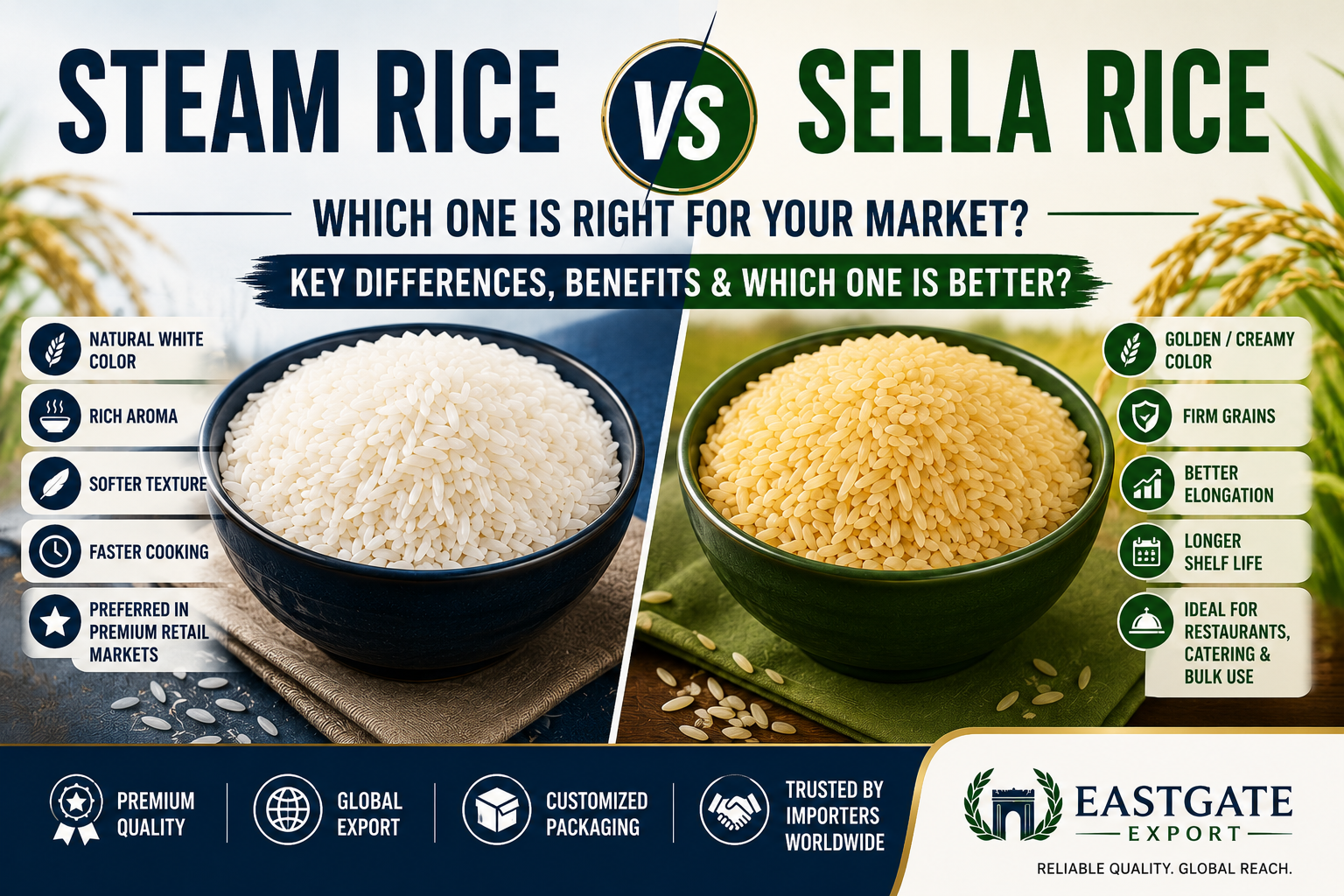
- Processing: Steam / Sella / White Sella
- Grain specification
- Broken percentage
- Moisture
- Foreign matter
- Sortex requirement
- Packaging
- Net weight
- Crop/year requirement
- Country of origin
- Labelling requirements
The more precise the specification, the easier it becomes to compare quotations from different suppliers.
Why this matters
Imagine you negotiate a price based on one quality specification but receive a shipment with different parameters.
Now the argument becomes:
“This is not what we expected.”
The supplier may respond:
“But this is our standard quality.”
The problem is not always the rice.
Sometimes the problem is that the buyer and supplier never agreed on the same specification.
Better approach
Put the product specification in writing before the order is finalized.
4. Ignoring Documentation and Destination-Country Requirements
A rice shipment does not end when the container leaves India.
The importer also has to consider the requirements of the destination market.
Depending on the country, requirements may involve:
- Commercial invoice
- Packing list
- Certificate of origin
- Phytosanitary documentation
- Health-related certificates where applicable
- Laboratory reports
- Fumigation documentation where applicable
- Product labelling
- Import permits
- Maximum residue limits
- Destination-country food regulations
Requirements can differ significantly between markets.
For example, a buyer importing rice into the GCC may have different compliance requirements from a buyer importing into the European Union.
Better approach
Before placing the order, tell your supplier:
“This rice is being imported into [country]. Please confirm which export and product documents you can provide and what specifications can be supported.”
The importer should also independently confirm the applicable destination-country requirements with the relevant authorities or customs/food compliance professionals.
5. Buying From a Supplier Without Checking Their Export Capability
A professional-looking website does not automatically prove that a supplier is a reliable exporter.
Before placing a large order, ask questions about the supplier’s actual export operation.
For example:
- How long have you been exporting?
- Which markets do you supply?
- Can you provide company documentation?
- Can you provide product specifications?
- Where is the rice processed or packed?
- Can you arrange the required packaging?
- Can you support private-label packing?
- What inspection options are available?
- What are the payment terms?
- What is the expected production and loading timeline?
You don’t need to interrogate every supplier.
But for a serious commercial order, basic due diligence is essential.
The real question is not:
“Is this supplier offering a good price?”
It is:
“Can this supplier consistently deliver the exact product, documentation, packaging and quantity I am paying for?”
A Simple Checklist Before Your First Basmati Rice Order
Before confirming a shipment from India, make sure you have:
☐ Supplier/company details verified
☐ Product sample approved
☐ Exact rice variety confirmed
☐ Processing type confirmed
☐ Quality specification documented
☐ Packaging and bag weight confirmed
☐ Quantity confirmed
☐ Price and Incoterm confirmed
☐ Payment terms confirmed
☐ Required documentation discussed
☐ Destination-country requirements checked
☐ Inspection/testing requirements agreed
☐ Production and loading timeline confirmed
If several of these items are still unclear, you are probably not ready to place the order yet.
What Should You Ask an Indian Rice Exporter?
Instead of sending a supplier only:
“Send your best price.”
Send a proper inquiry:
Product: 1121 Basmati Rice
Processing: Sella / Steam / White Sella
Quantity: ___ MT
Packing: ___ kg
Destination: ___ Port, ___ Country
Private Label: Yes / No
Required specification: ___
Incoterm: FOB / CIF
Required documents: ___
This allows the exporter to provide a much more accurate quotation.
Final Advice for Rice Importers
India has many Basmati rice suppliers, but not every supplier is the right supplier for every importer.
Don’t choose your supplier based on price alone.
A reliable purchasing decision should consider:
Price + Quality + Specification + Documentation + Consistency + Export Capability
The objective is not to find the cheapest container.
The objective is to receive the product you ordered, at the agreed quality, with the required documentation, on the agreed commercial terms.
That is what makes a rice import transaction commercially sustainable.
Looking for Basmati Rice from India?
EASTGATE EXPORT™ supplies Basmati and non-Basmati rice for international B2B buyers, including importers, wholesalers, distributors and private-label businesses.
Tell us your:
Rice variety + Quantity + Packing requirement + Destination port
and our export team can prepare a quotation based on your requirements.
EASTGATE ™
Indian Rice Manufacturer & Exporter
🌐 www.eastgateexport.com
📞 +91 80763 53873
✉️ info@eastgateexport.com
Request a quotation for your next rice shipment.